I will be serialising my new book How We Become – A Therapeutic Guide For Reflection on Substack from 10th January. The article below the picture is from the opening piece.
You can join the reflection series by subscribing to my Substack. It would be wonderful to see you there.
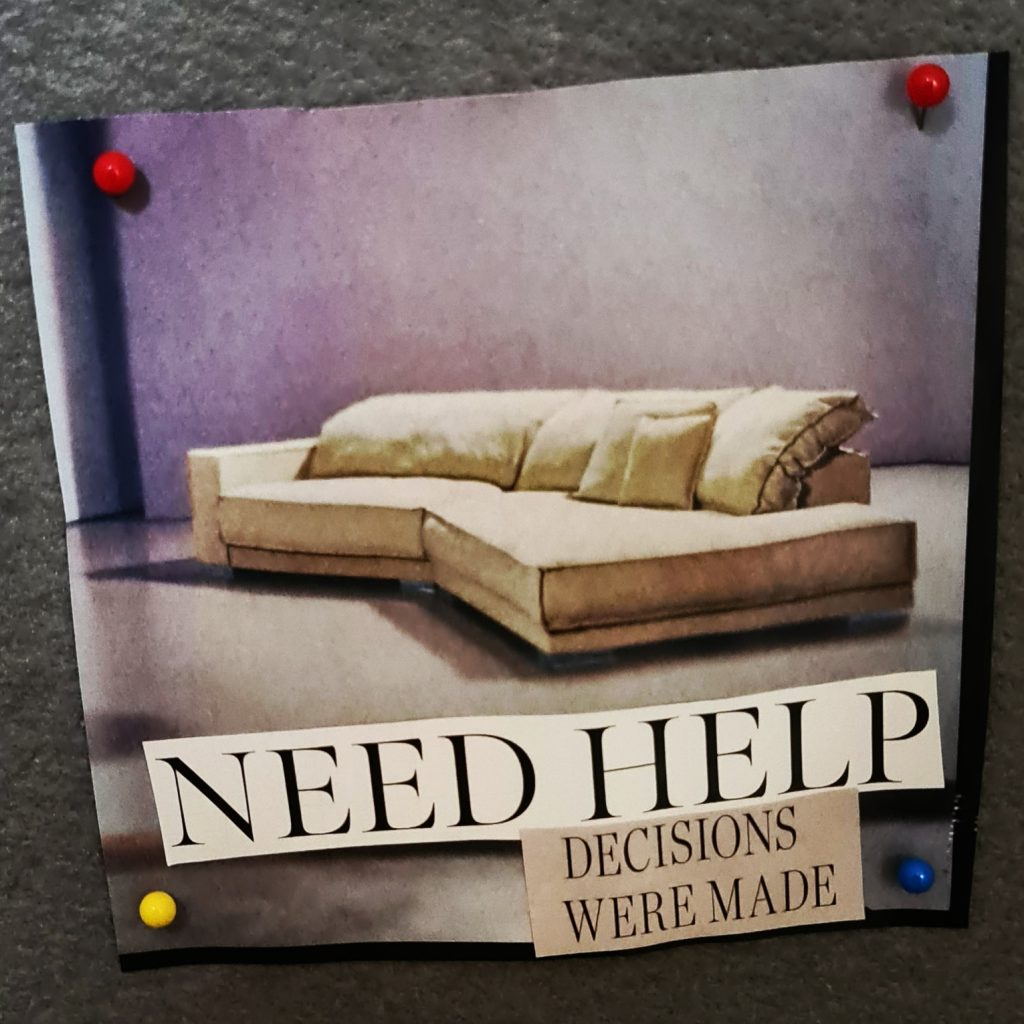
Welcome to this quiet and reflective corner in a busy world. I invite you, as I would if you were in the room with me, to settle into the chair or sofa you feel most comfortable in, and simply pause for a while.
Before posting the first chapter of How We Become – a Therapeutic Guide for Reflection, I’m sharing the following opening piece. The first chapter will arrive on Saturday, 10 January.
Feel free to subscribe to receive new chapters every two weeks from 10 January until 30 May.
If you’d like to read more about why I’ve chosen to serialise my book here on Substack, you can find that piece here. If you’d like to to explore my earlier work, Therapy Toolkit: Sixty Cards For Self-Exploration (LKP 2021) you can find more information here.
My new book: How We Become is written with couples in mind, but many of the reflections can be just as useful individually, or within other kinds of relationships. Where needed, I’ve included small adaptations to support this.
How We Become, How We Return
Do we grow up and away, or do we simply form and fold and reform like waves?
We are the baby who was born and screamed and ate and slept, the toddler who tried and explored and felt and stumbled, the young child who laughed and talked and learned and tried to understand, the teenager who screamed and ate and slept, the young adult who tried and explored and felt and stumbled, the older adult who laughed and talked and learned and tried to understand.
We are not stuck if we circle back; we just need to know why, so we can find what we missed and receive where we are still longing.
Welcome to How We Become – a Therapeutic Guide for Reflection
Listening and Being Heard
Dinners are served, birthdays are had, days follow nights – until the moment emerges when the light barely crawls over the horizon and it has become difficult to see each other clearly. It is here, when a couple has been struggling with their relationship for a length of time, they most often tend to reach out to a therapist. It is a hugely positive step, and brave, but in the build-up to this moment, certain patterns of thinking, feeling and relating, especially in conflict situations, have become embedded – often so much that they find it difficult to trust the therapeutic process, and especially in listening to each other.
While there might be an openness to engage, what often transpires is a desire for the other to change. When both parties feel like this, and have done for a long time, it can become difficult to find a quiet space within to listen carefully to each other’s experience of, not just the relationship, but each person’s inner life, which is a pivotal part of the therapeutic process.
Even if you are not in a difficult place in your relationship – or if you are reading this from a personal reflection point of view rather than within a couple – truly listening without inferring your own thoughts and opinions and feeling safe enough to be completely open in return, can still feel tricky. This therapeutic guide provides a structure that will help you enter a receiving frame of mind when listening and feel safely held when reflecting and sharing.
The Promise
The most touching and profound aspect of working with couples – and any client – is the invitation to, for a while, be welcomed into their innermost world – both as a couple and individually.
In today’s noisy online world with its wealth of – often disparate – mental health advice and opinions, you might assume that the default position of a therapist is ‘I can save you’ or ‘I can save your relationship.’ But for many, me included, it is rather anchored in ‘let us find and understand your wounds and begin healing them together.’
I want you to know that I carry no rigid assumptions of what I can do for you, nor do I carry any expectations of what you should achieve. What I am offering is a non-judgemental space, meaningful and appropriate compassion, and qualifications and experience to help you explore, understand and hopefully move towards change that feels positive and healing.
Avoiding Self and Other Diagnosis
You may be familiar with these words: gaslighting, trauma, narcissist. These, and many more, are now used so much (especially across social media) that there is a real danger of them losing their true meaning and impact.
I invite you throughout this series to avoid self and other diagnosis. That is not to say diagnosis is not important, but it should be conducted by a qualified practitioner. For this shared exploration, keeping clinical words out of the conversation is not only supportive, but hugely important. If you feel unsafe with your partner, or whomever you might be exploring this with, at any point in the process, step away and seek professional support instead of trying to diagnose what might be happening.
Closeness in Separation
For many couples, therapy has brought them closer together romantically. For others, the process has led to a realisation that parting ways is where they need to go, and that this, despite initial resistance, can be done with respect and compassion rather than anguish and aggression.
There is little mention of this in couples’ self-help literature, and I feel it’s important to name that even if you do reach, or you are at a point of, romantic separation, the work does not necessarily end there. It is still possible to continue reflecting, healing, and to establish a different kind of closeness or calm. Even if that simply means inside yourself when there is resistance from the other. The same goes for complex family dynamics and friendships.
Difference and Context
The cornerstones of romantic relationships, like safety, physical and emotional intimacy, love, and attachment needs are universal, whether between a man and a woman, two men, two women, couples where one or both have transitioned or couples where one or both are non-binary.
However, there are still nuances that are worth keeping in mind, especially around how you both individually see yourself and feel seen by society, and how it may impact your relationship. This could include masculine and feminine ideals, expectations based on gender and sex, cultural identity – from religious norms and expectations to traditional values and ingrained beliefs. For many, experiences such as racism, misogyny and ableism impact their life every day, and this can be difficult to navigate in relationships (romantic, friendship, family, work) where the experience is not shared.
Acknowledging and validating the differences between you will not create distance, but rather build a bridge you can cross to truly see and be seen by each other
Reflection Exercise
As a small reflection exercise until the series starts, I invite you to pay attention to how you move through the world, both physically and emotionally. Not to analyse, just to notice.
When does your heart beat faster?
When do you feel calm?
Which people or surroundings give you a sense of safety?
Where, when, or with whom do you feel more on edge?
How do you experience these things physically?
What are your thoughts doing? Ruminating? Avoiding?
You can make simple, little notes – again, no analysis, just observation, or simply activate an intention to be conscious and see what comes up for you.
As you become more aware, I encourage you to pause when you notice a recurring feeling/sensation and ask yourself this: What is familiar to me here?
You don’t have to have an answer, simply allow the question to filter through your body. If anything comes up for you, you can write it down. If not, keep the question gently in mind and remind yourself that you are simply paying attention and staying open.
You can keep these notes in a notebook dedicated for this series, or you can head over to my website from the 10 January and download a document containing a form to help you keep track of feelings and patterns. Here you will also find each chapter’s reflection exercises.
I wish you well, and I hope to connect with you here again next Saturday.